


Sewage Backup in Your Colorado Springs Home: Emergency Steps and Health Risks

Updated: Oct 8
A sewage backup is one of the most dangerous property damage emergencies a homeowner can face. Unlike clean water from a burst pipe, sewage is classified as Category 3 water—also called "black water"—containing bacteria, viruses, parasites, and toxic chemicals that pose immediate health hazards. This is never a situation for DIY cleanup.
Sewage can enter your Colorado Springs home through floor drains, toilets, bathtubs, and sinks when municipal sewer lines are overwhelmed, blocked, or damaged. Knowing what to do—and what absolutely not to do—protects your family's health and your home.
Sewage Backup? This Is an Emergency.
Sewage is a serious health hazard. Do not attempt cleanup yourself.
Evacuate the affected area and call for professional Category 3 water damage restoration immediately.
Comfort Restorations 24/7 Emergency: 719-439-0611

Immediate Safety Steps
Sewage backup is a health emergency first and a property damage event second. Take these steps immediately.
Evacuate the affected area.
Get everyone—including pets—out of the contaminated area. Close doors to affected rooms to limit the spread of airborne contaminants. Do not allow children near sewage water under any circumstances.
Do not touch contaminated water.
Sewage contains pathogens that can cause serious illness through skin contact, ingestion, or inhalation. If you must walk through the affected area, wear waterproof boots and avoid splashing. Wash any exposed skin immediately with soap and hot water.
Turn off the HVAC system.
Your heating and cooling system can spread airborne contaminants throughout your home. Turn it off at the thermostat or breaker panel to prevent cross-contamination of unaffected areas.
Do not use plumbing.
If sewage is backing up through drains, using any plumbing fixture can add more water to the backup. Don't flush toilets, run sinks, or use washing machines or dishwashers until the blockage is resolved.
Shut off electricity if safe.
If sewage water has reached electrical outlets, appliances, or your electrical panel, shut off the main breaker—but only if you can reach the panel without stepping in contaminated water. If the panel is in the affected area, call Colorado Springs Utilities at 719-448-4800 for emergency disconnection.
Call for professional help.
Contact a restoration company experienced in Category 3 water damage immediately. Comfort Restorations responds 24/7 at 719-439-0611 with IICRC-certified technicians trained in sewage cleanup protocols.
Health Hazards of Sewage Backup
Sewage is not "dirty water"—it's a biohazard. Understanding the health risks explains why professional cleanup with proper containment and PPE is the only safe approach.

Bacteria:
Sewage contains dangerous bacteria including E. coli, Salmonella, Shigella, and other pathogens that cause gastrointestinal illness, urinary tract infections, and skin infections. Contact with contaminated water or surfaces can transmit these organisms.
Viruses:
Hepatitis A, norovirus, rotavirus, and other viruses survive in sewage and can infect through contact or inhalation of contaminated aerosols. These viruses cause severe illness and are especially dangerous for children, elderly, and immunocompromised individuals.
Parasites:
Sewage may contain parasitic organisms including Giardia, Cryptosporidium, and various helminths. These organisms can survive on surfaces and in porous materials long after the water has receded.
Toxic gases:
Sewage produces hydrogen sulfide, methane, and ammonia. In enclosed spaces like basements, these gases can cause:
nausea, headaches, and dizziness
eye and respiratory irritation
loss of consciousness (at high concentrations)
explosion risk (methane is flammable)
This is why sewage cleanup is always a professional job. IICRC-certified technicians wear full PPE including respirators, chemical-resistant suits, and gloves. They use containment protocols that protect both workers and the uncontaminated areas of your home.
Common Causes of Sewage Backup in Colorado Springs
Aging Sewer Lines
Many Colorado Springs neighborhoods were built in the 1960s–1980s with clay or cast iron sewer laterals (the pipe connecting your home to the municipal sewer). These materials deteriorate over time—cracking, collapsing, and creating blockage points that cause backup.
Tree Root Intrusion
Tree roots seek moisture and can infiltrate sewer lines through joints and cracks. Over time, roots grow inside the pipe, creating blockages that restrict flow and eventually cause backup. Mature trees near sewer lines are a primary risk factor in established Colorado Springs neighborhoods.
Heavy Rain Overwhelming the System
Colorado Springs' summer monsoon storms can drop significant rain in short periods. When storm water overwhelms the municipal sewer system or infiltrates the sanitary sewer through cracks and connections, the system backs up—pushing sewage into homes through the lowest-point drains (typically basement floor drains).
Frozen Sewer Lines
In severe cold, shallow sewer laterals can freeze—particularly in homes where the line runs under driveways, walkways, or areas with little insulating ground cover. A frozen sewer line blocks all drainage from the home.
Combined Blockages
Grease buildup, non-flushable items (wipes, feminine products, paper towels), and foreign objects combined with root intrusion or pipe deterioration create blockages that are the most common cause of residential sewage backup.
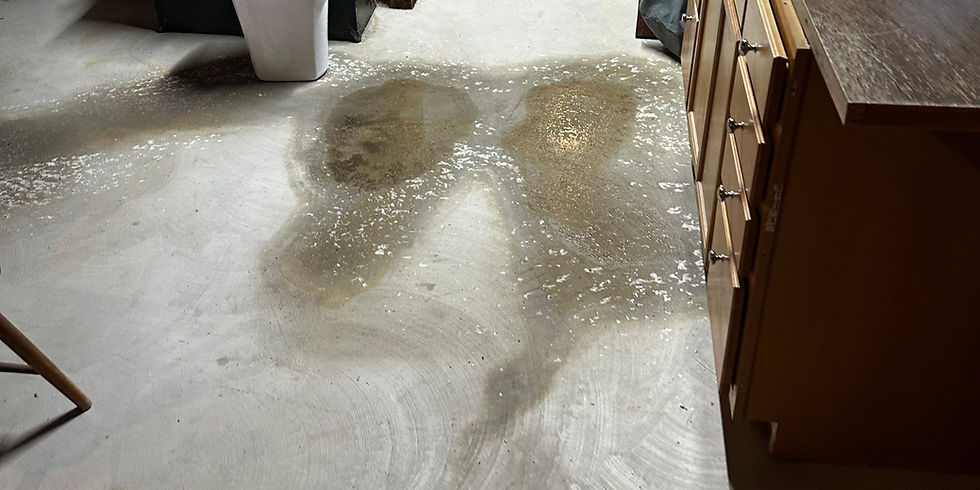
Professional Sewage Cleanup Process
Category 3 water damage requires the most rigorous cleanup protocols in the restoration industry. Here's what professional sewage remediation involves:
Safety Assessment and Containment
Technicians arrive in full PPE and assess the scope of contamination. Containment barriers isolate the affected area from uncontaminated portions of the home. Negative air pressure prevents airborne contaminant migration.
Sewage Extraction
Contaminated water is extracted using specialized equipment. All extracted water is disposed of according to local regulations—it cannot be discharged into storm drains or other waterways.
Removal of Contaminated Materials
All porous materials that contacted sewage must be removed and disposed of as biohazard waste. This includes:
Carpet and carpet padding
Drywall (minimum 12 inches above the visible water line, often more)
Insulation
Particleboard, OSB, and other engineered wood products
Upholstered furniture
Paper products and cardboard
Antimicrobial Treatment
All remaining surfaces and structural materials receive EPA-registered antimicrobial treatment. This includes concrete floors, wall framing, subfloor materials, and any non-porous surfaces that contacted sewage. Multiple treatment applications may be required.
Structural Drying
Commercial dehumidifiers and air movers dry the structure to IICRC S500 standards. Moisture monitoring verifies complete drying—critical after sewage contamination to prevent secondary microbial growth.
Verification and Documentation
Post-cleaning verification confirms all contamination has been addressed and moisture levels are acceptable. Complete documentation—photos, moisture readings, treatment records—supports your insurance claim.
What Gets Saved vs. What Gets Replaced
With Category 3 water, the rule is straightforward: porous materials that contacted sewage are replaced, non-porous materials are cleaned and sanitized.

Replaced — cannot be salvaged:
Carpet and padding — Always replaced after sewage contact
Drywall — Removed at least 12–24 inches above visible water line
Insulation — All insulation that contacted sewage
Particle board and MDF — Including cabinet components and shelving
Upholstered furniture — Fabric absorbs contaminants that cannot be fully removed
Mattresses and bedding that contacted sewage
Paper, cardboard, books
Cleaned and sanitized — may be salvaged:
Concrete floors — Cleaned and treated with antimicrobial agents
Solid wood framing — Cleaned, treated, and dried (structural lumber can typically be salvaged)
Metal surfaces — Cleaned and sanitized
Tile and stone — Cleaned, grout may need treatment or replacement
Non-porous hard goods — Cleaned and sanitized individually
Solid wood furniture — May be salvageable depending on exposure duration and extent
Insurance Coverage for Sewage Backup
The Standard Exclusion
Most standard homeowners insurance policies exclude sewer and drain backup. This is one of the most common—and most costly—coverage gaps Colorado Springs homeowners face. Without a specific endorsement, sewage backup damage is typically denied.
Sewer Backup Rider
A sewer backup endorsement (also called a rider or add-on) provides coverage for damage caused by sewer line backup. Key details:
Cost: Typically $50–150 per year—one of the most cost-effective endorsements available
Coverage limits: Often capped at $5,000–$25,000 (check your specific rider)
What it covers: Cleanup, structural repair, content replacement from sewer backup
What to Check in Your Policy
Do you have a sewer/drain backup endorsement?
What is the coverage limit?
Does the endorsement cover both cleanup and structural repair?
Is there a separate deductible for sewer backup claims?
If you don't currently have sewer backup coverage, call your insurance agent today. The cost of the endorsement is a fraction of a single sewage cleanup event.
Comfort Restorations provides detailed documentation for sewage backup insurance claims, including contamination assessment, scope of work, and itemized costs in formats adjusters require.
Preventing Sewage Backup
Install a Backwater Valve
A backwater (or backflow) valve is installed on your sewer lateral and automatically closes when sewage flows backward toward your home. This is the single most effective prevention measure. Some municipalities require them for new construction; retrofitting is possible and recommended for older homes.
Sewer Line Inspection
A professional sewer camera inspection reveals the condition of your sewer lateral—cracks, root intrusion, bellies (low spots that collect waste), and deterioration. Recommended every 3–5 years for older homes, or immediately if you've experienced slow drainage or partial backups.
Tree Root Management
Know where your sewer lateral runs (your utility company can help locate it)
Avoid planting large trees near the sewer line
Chemical root treatments can prevent root intrusion at pipe joints
Remove roots that have already infiltrated through professional sewer cleaning
Smart Drain Practices:
Never pour grease down drains — Grease solidifies in pipes and creates blockages
Don't flush wipes — Even "flushable" wipes don't break down and cause blockages
Limit garbage disposal use — Food waste accumulates in sewer lines
Run water during disposal use — Helps flush waste completely through the line
Frequently Asked Questions

Can I clean up sewage backup myself?
No. Sewage is classified as Category 3 (black water)—a biohazard containing bacteria, viruses, and parasites. Professional cleanup requires full PPE, containment protocols, specialized antimicrobial treatments, and biohazard waste disposal. DIY cleanup puts your health at serious risk and may void insurance coverage.
How long does sewage cleanup take?
Professional extraction and initial cleanup typically takes 1–2 days. Structural drying takes an additional 3–5 days. Reconstruction of removed materials (drywall, flooring, cabinetry) depends on scope but typically takes 1–4 weeks. Comfort Restorations provides detailed timelines during assessment.
Is sewage backup covered by flood insurance?
No. NFIP flood insurance and sewer backup coverage are separate. Flood insurance covers surface water entering your home from outside. Sewer backup coverage (a rider on your homeowners policy) covers sewage entering through your plumbing system. You may need both depending on your risk factors.
How quickly does sewage become dangerous?
Sewage is dangerous immediately upon contact. Pathogenic organisms are present from the moment sewage enters your home. The danger increases as the contamination sits—bacteria multiply, gases accumulate, and contamination spreads to additional materials.
Will my home smell after sewage cleanup?
Properly performed professional cleanup eliminates odor. All contaminated porous materials are removed, remaining surfaces are treated with antimicrobial agents, and the structure is thoroughly dried. If odor persists after cleanup, additional contaminated materials may need removal. Comfort Restorations doesn't consider a job complete until the space is clean, dry, and odor-free.
Sewage Emergency? Don't Wait.
Sewage backup is a health hazard that requires immediate professional response. Every hour of delay increases contamination, health risk, and restoration cost.
Sewage Backup Emergency? Call Now.
24/7 Category 3 Water Damage Response | IICRC-Certified Technicians
About Comfort Restorations
Comfort Restorations is a veteran-owned water damage restoration company serving Colorado Springs, Monument, Black Forest, Falcon, and surrounding communities since 2020. We're IICRC Certified, BBB A+ Accredited, and trained in Category 3 water damage protocols for sewage backup emergencies.
Related Services: Water Damage Restoration | 24/7 Emergency Mitigation | Mitigation to Reconstruction


Comments